
It has now been a bit over 3 years since my initial post describing my homelab and its story. A lot has changed since then, and my lab has grown into something even bigger that I’m beyond pleased with!
In December of 2021, very shortly after my original post, I purchased a QNAP TS-451+ NAS with the intention of stabilizing and expanding the storage for my Plex server. I used a set of four 3TB WD Red drives in RAID5 giving me a total of roughly 8TB of usable storage. The NAS was named “Calypso” and became the 4th server/machine in my homelab.
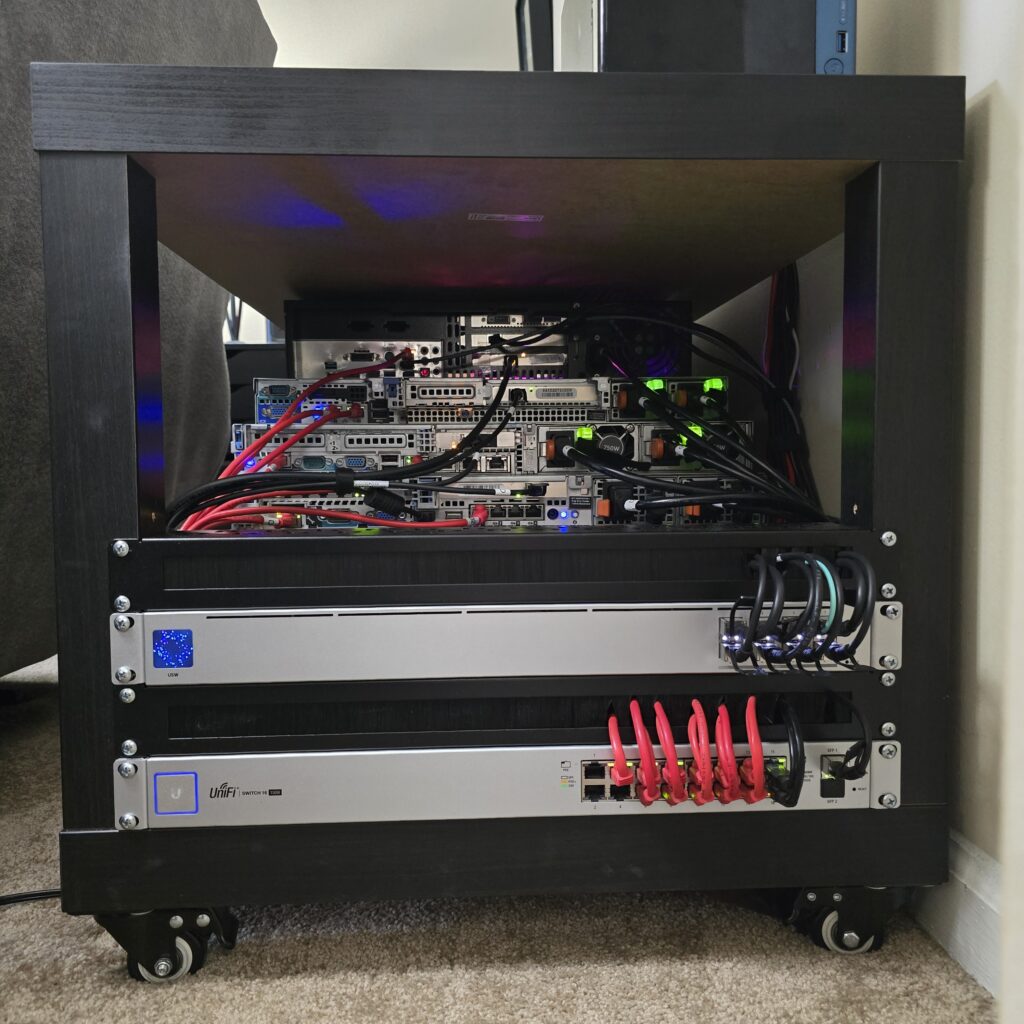
Later, in January, I made another major upgrade by purchasing a Unifi Dream Machine Pro to replace the standard Dream Machine that I had been running my network with previously. Due to its placement above the UPS, I had to relocate the 16 port switch to the back of the rack, which ended up making more sense as the switch primarily fed the servers directly above. With the installation of the UDMP, I also decided to invest in a 1TB drive and some cameras for Unifi Protect including three G3 Instants and a G4 Doorbell.
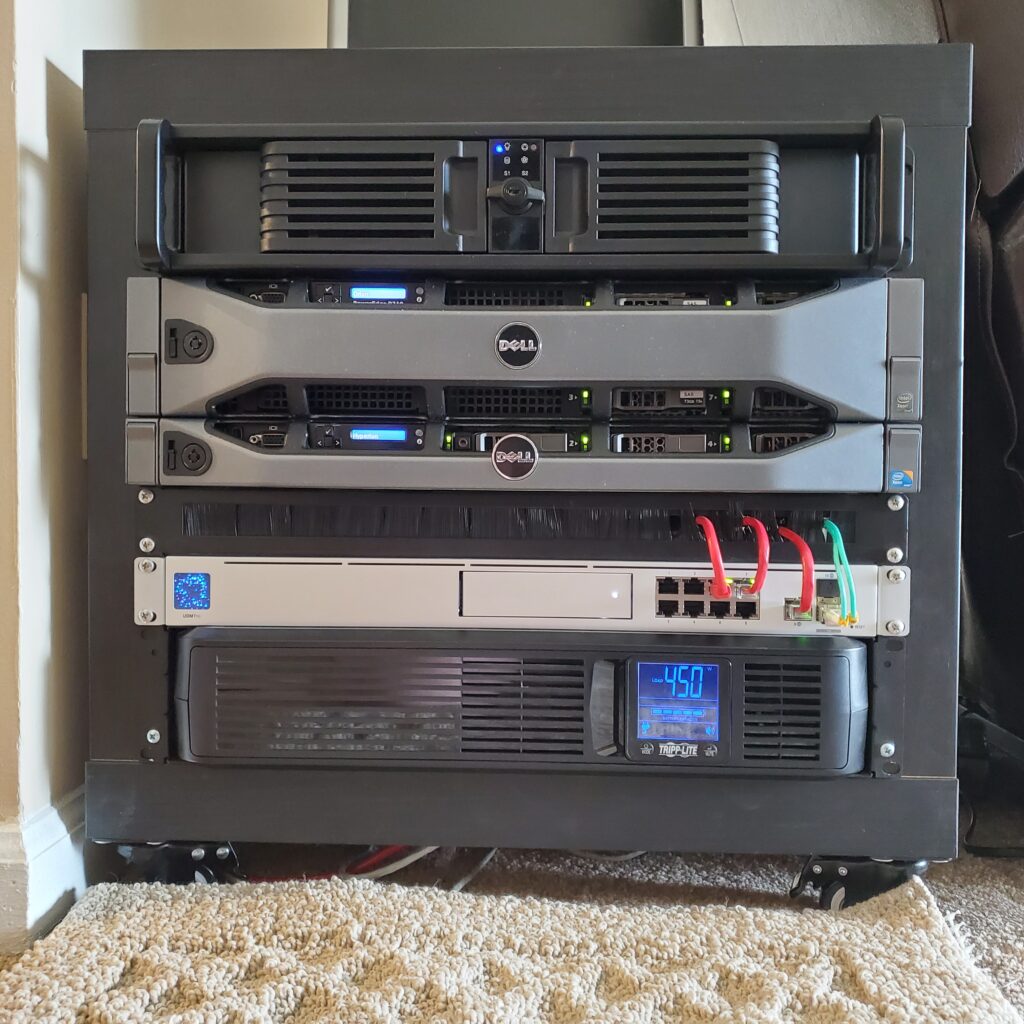
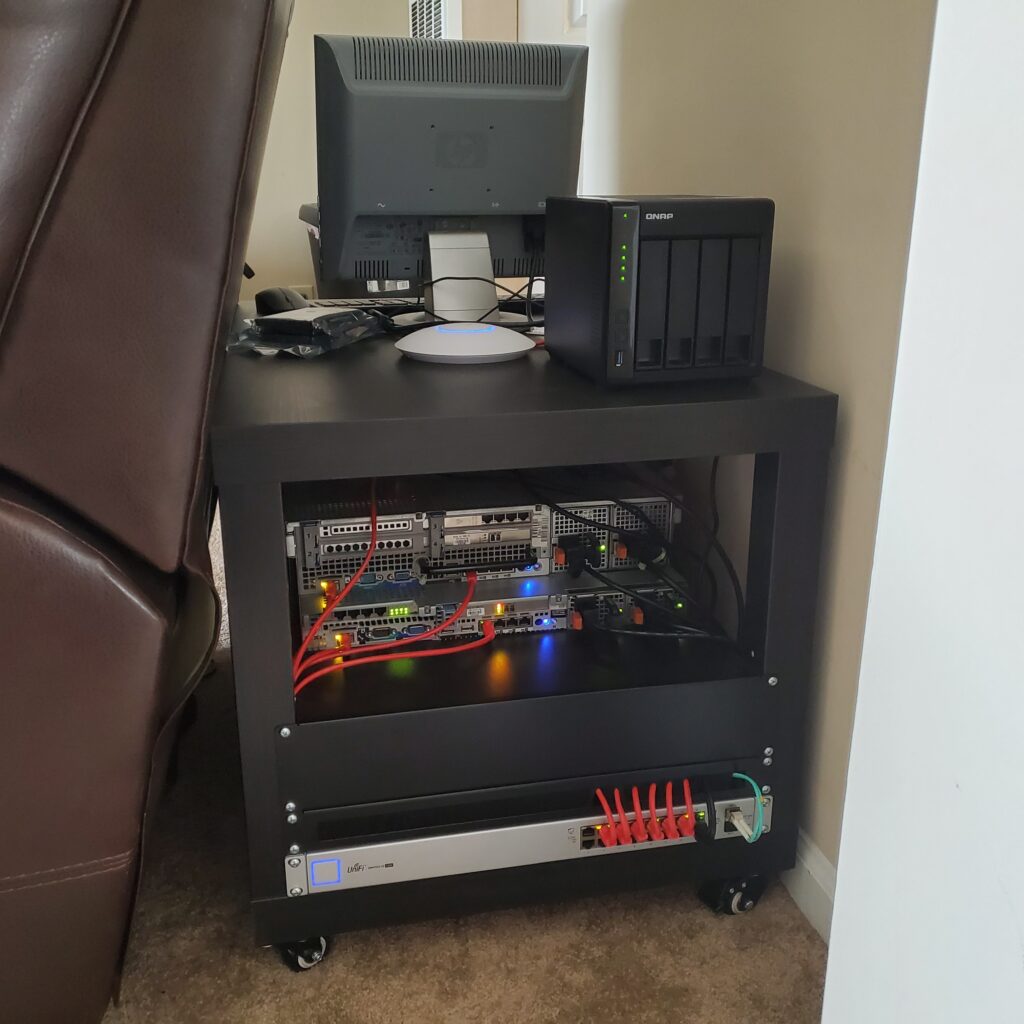
Following these upgrades, things remained basically the same hardware-wise for a little over 2 years. I spent a majority of my time expanding my Plex library and experimenting with different self hosted applications. That was until I stumbled upon a killer deal in March of 2023. While browsing the GRID (Goodwill’s electronics-only store), I found a Dell R620 server sitting on the bottom shelf of an aisle for $24.99. It didn’t have processors or memory, but it DID have the RAID controller and iDrac card, which made it beyond worth the price in my eyes. In yet another stroke of great luck, when checking Facebook Marketplace to attempt to locate some processors, I found a pair of Intel Xeon E5-2620 processors locally for just $20.
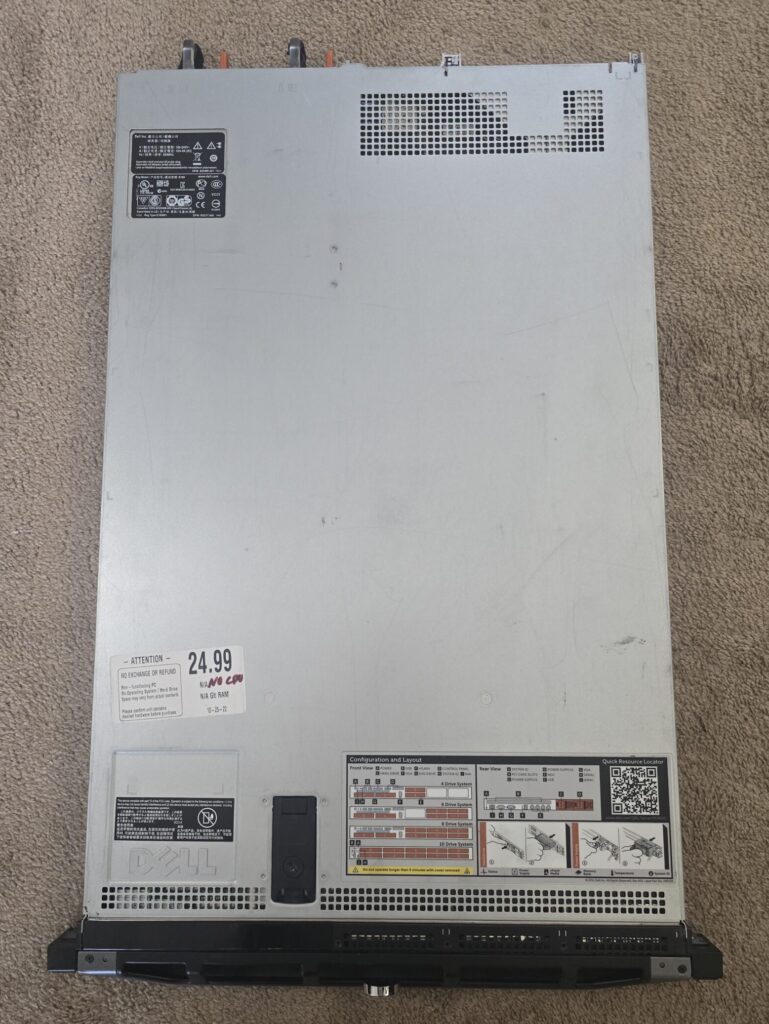
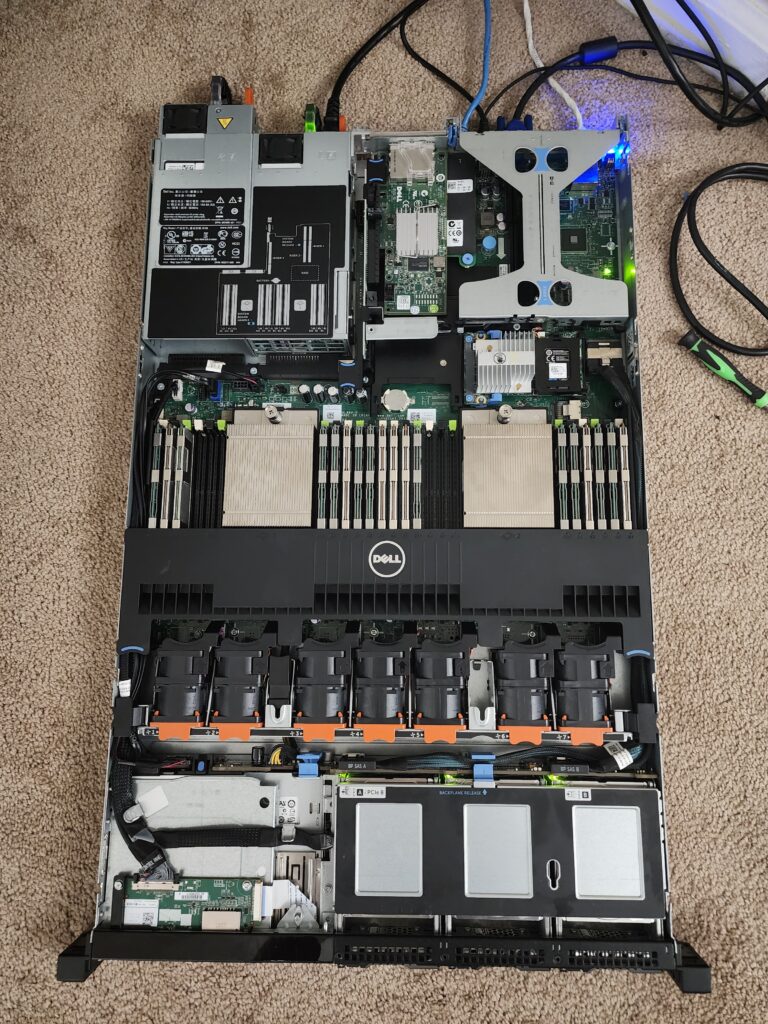
Now that I had all of the parts, I was able to start working towards my goal of swapping Orion from the R710 to my new R620. The server was a generation newer, but through heavy research I was confident that it should be possible to move the drives into the new server and have the RAID arrays automatically imported. Crossing my fingers, after moving the drives and memory, I pressed the power button to boot the new Orion for the first time. Everything was perfect, and both arrays were found and easily imported in the new controller. ESXI also booted with no issue, though I did have to “remount” the datastores as the new controller was treated as a new storage adapter by the hypervisor.
While my initial reasoning for moving Orion to the new server was just to improve performance, an added bonus was the additional 1U space that was now available in the rack. Around this same time, I was starting to run low on space for my Plex media, so I decided to use that new space for another server to act as a dedicated Plex media NAS. I did lots of research trying to figure out what would work best, tossing around the idea of something custom built, but I eventually settled on the Dell R330. Unlike every other server/machine in my homelab, I ended up purchasing an R330 from a seller on eBay and having it shipped. I monitored Facebook Marketplace and used electronics stores locally like always, but it was such an uncommon server that I was never able to find exactly what met my needs.
The R330 I purchased was the 4x 3.5″ drive bay version featuring an Intel Xeon E3-1220 V5 processor and 16GB of memory. For storage, I purchased four 12TB Seagate Exos drives to run in RAIDZ1 and a 2.5″ Samsung 870 QVO 1TB SSD to act as the boot drive. Once assembled, the server was installed between Alioth and Orion with the name “Ophelia”. With its installation, I began the transfer of my media library, allowing Calypso to be repurposed as my general use NAS for pictures, documents, and miscellaneous files.
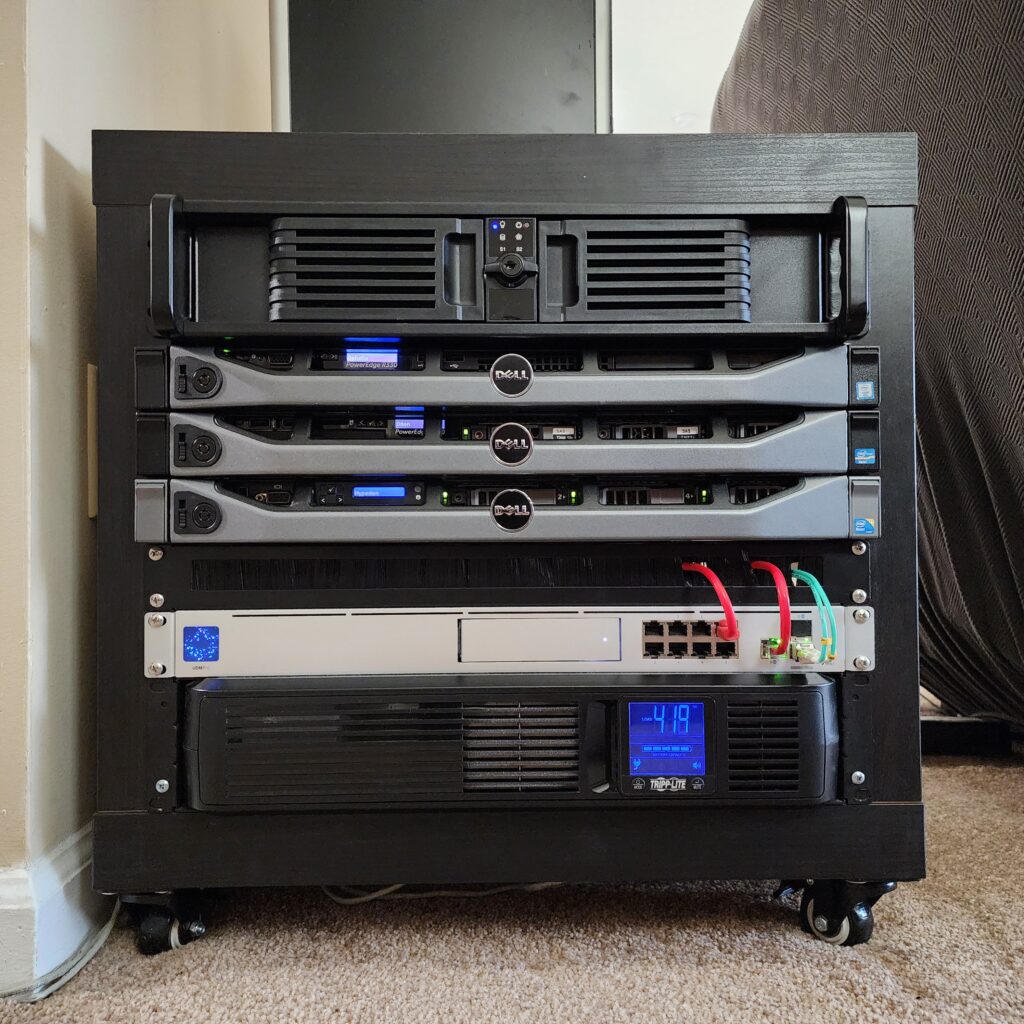
Following this wave of upgrades, I yet again hit a lull in hardware upgrades and instead focused on expanding the software side of things. During this period, one of the first software upgrades I made was the implementation of the Arr Suite of applications. With the massive amount of spare space I had available on my new NAS, I wanted to automate the import of media for my Plex server. After considering running the applications in Docker containers, I instead decided to host everything on Hyperion. There were many reasons for this, but some of the biggest included the fact that qBitTorrent and Soulseek were already running for anime and music ingest, and Hyperion’s uses had greatly decreased since the construction and installation of Alioth, Calypso, and Ophelia.
With the addition of the Arr Suite, I also began my journey with Usenet. I had heard about it for years before on different forum and reddit posts, but my brief research at the time led me to believe it was extremely complicated and difficult to get going. After looking into things a bit further, however, I quickly learned how simple things actually were and successfully set everything up, including NZBGet for downloading. This allowed me to begin rapidly expanding my Plex server with the additional installation of Overseerr on Orion for user requests via Docker. My library now features over 200 movies, 600 shows, and 15,000 songs.
Next, I installed and started experimenting with Home Assistant on Calypso to manage my various smart home devices and cameras. This was an amazing new piece of software that had more potential that I could have imagined. Initially, my goal was just to centralize control of all of my different devices from various manufacturers on one control panel, but the usefulness of it expanded well beyond that. This ended with me constructing and installing a control panel in my home using an old 9.7″ Samsung Galaxy Tab S3.
After setting up Home Assistant, I came to the realization that I needed a better way to keep track of links for all of the services and applications I had started hosting. I had tried some dashboards before, such as Homer and Flame, but I hadn’t really felt that either of them met my needs and tastes. Then I stumbled upon a fairly new dashboard application by the name of Homepage. Not only did it allow sorting services into different categories, but the services could have widgets attached that would display stats. This is without a doubt one of my favorite pieces of software that I host, and it has only improved over the years.
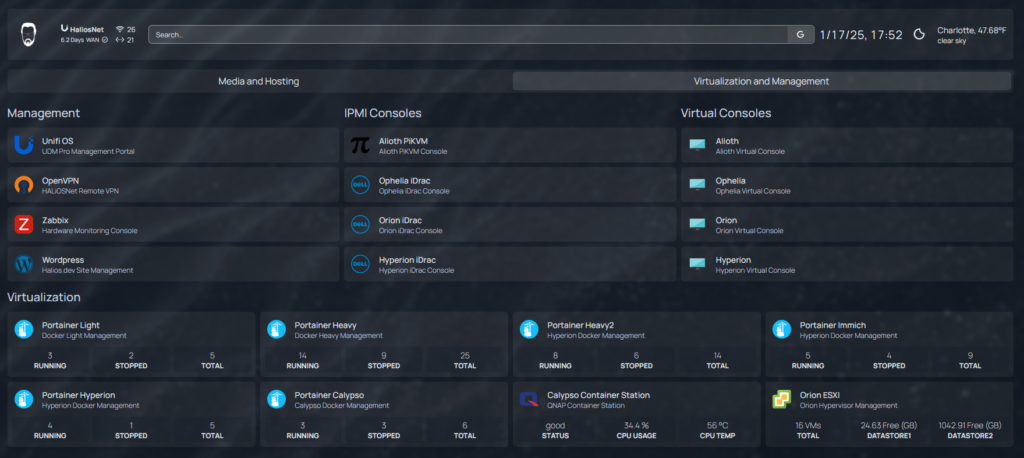
In the months following, I installed and experimented with a multitude of additional pieces of software including Immich, OpenVPN Cloud Connexa, Zabbix, Uptime Kuma, Cloudflare Zero Trust, and much more. I continued to browse the various subreddits, Facebook groups, and forums constantly looking for new software to try out and expand my lab.
In December of 2024, I finally started the next major round of hardware upgrades for my lab. The first piece was a Unifi USW Aggregation to finally allow for 10GbE networking. Alongside this, I purchased the necessary Mellanox SFP+ NICs and Ubiquiti DAC cables. For my desktop, I purchased a singlemode simplex fiber cable to run along the same path as the existing cat5e cable. While installing the NIC in Alioth, I took the time to finally install an Nvidia GTX 1650 Super that I had been gifted a year or two prior. After patching the driver, I now had the ability to do upwards of 14 simultaneous transcodes on Plex. I also took the opportunity to finally purchase and install a PiKVM for Alioth, finally allowing direct control of all 4 servers. This had the added bonus of allowing me to remove the monitor on top of the rack and clean things up a bit more.
Following this initial installation, I now had 10GbE available on all of my servers except for Calypso. To solve this, I decided to purchase a TS-453Be to replace the TS-451+ I was currently using as it allowed for the installation of a PCI-E card. The only limitations, however, were the non-standard PCI bracket and limited lanes that prevented full use of the 10GbE bandwidth. This was easily solved by the modification of a half-height bracket, beating it flat and drilling a mounting hole. For the speed limitation, my belief was that it was still enough of an upgrade above 1GbE that it wasn’t worth worrying over.
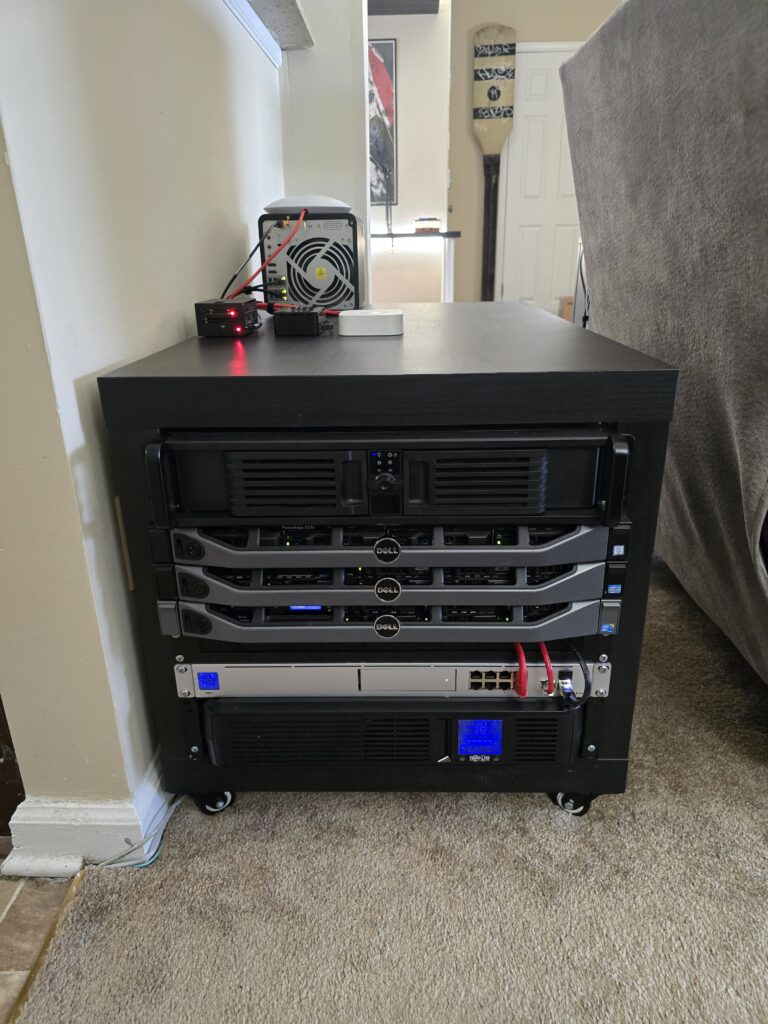
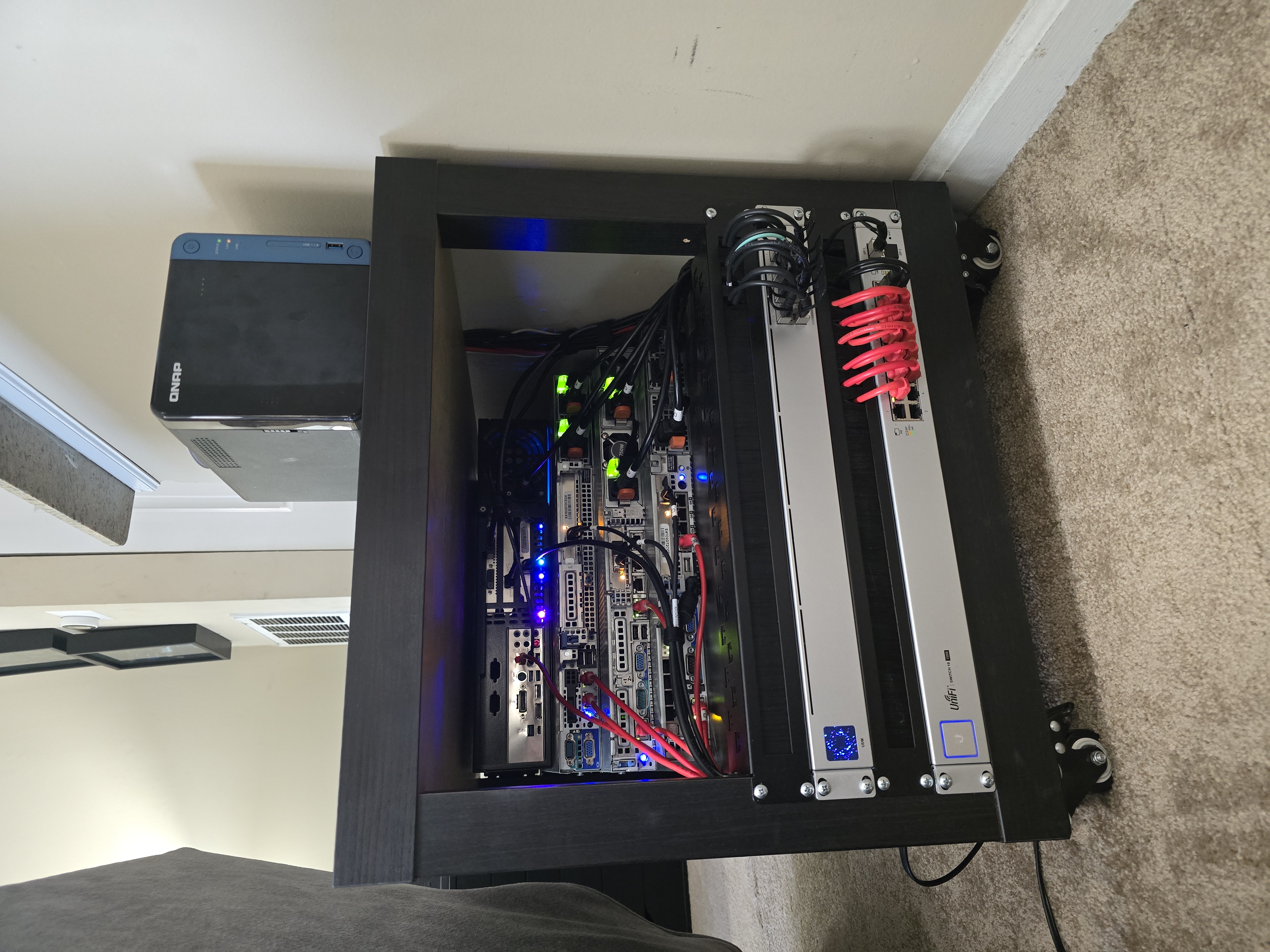
With the completion of the Calypso upgrade, we reach the present. As of now, my next major plans are the upgrade of the 16 port switch and UPS, but neither project is on the immediate horizon. For now, I plan to continue growing my lab and expanding my knowledge through the experimentation and installation of the ever expanding library of self hosted software and applications!